Can AI draw a picture a child can trust?
October 31, 2026
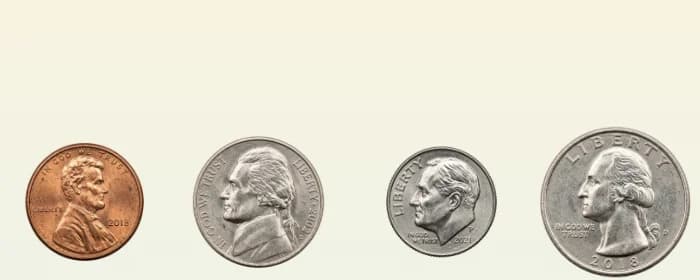
Some lessons need the real thing. A child learning to count US coins should see a real penny, nickel, dime and quarter, so they recognise them at the shop the next day. A cartoon circle with "10¢" written on it doesn't do that.
AI image models can now draw pictures like these. Before putting one in a lesson, we wanted to know how often they get the facts wrong.
What we tested
We took nine real teaching topics and gave each one to eight image models, one picture per model. Then we checked every picture by hand: right or wrong. The topics:
- a monarch butterfly next to a viceroy (they look alike, but the viceroy has an extra black line across its hind wings)
- a red maple, a white oak and a ginkgo leaf
- the four giant planets
- a cross-section of the human heart
- four rocks: granite, obsidian, pumice, sandstone
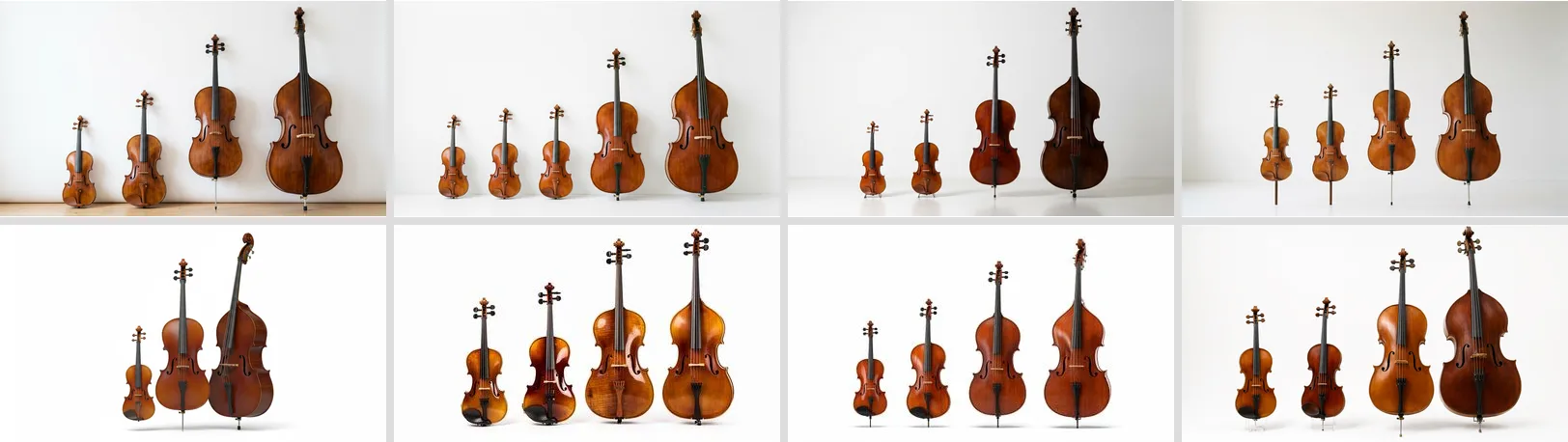
- the four string instruments of the orchestra, from violin to double bass
- a frog's life cycle, from eggs to adult
- four national flags
- US coins
It's a small test: enough to choose a model, not a ranking of AI models.
What we found
- Mistakes are easy to miss. Common ones: five string instruments instead of four; labels and numbers on a picture we had asked to keep free of text; a viceroy missing its line; a white oak leaf with pointed edges where they should be rounded.
- The most accurate model wasn't the most expensive. Google's Nano Banana 2.1 got all nine right, and costs about half as much as its predecessor.
- Letting the model search the web didn't make it more reliable. It fixed some mistakes and caused others.
- No model got the planets' sizes right. They drew Jupiter, Saturn, Uranus and Neptune with the right colours, but not at the right sizes relative to each other.
- Flags have to be exact, and AI pictures aren't. Several came out with details wrong.
What we built from it
- Real pictures only where they matter: when a child needs to recognise the real thing, such as coins, an animal, a leaf or an instrument. Everything else stays in our illustrated style.
- Some things we never generate: flags, maps, text, and real people.
- Each picture is made once, when the lesson is built and before anyone plays it. Nothing is generated while your child is playing.
- Sizes come from real measurements, not from the picture. A real dime is 17.9 mm across and a penny 19.05 mm, so in the lesson the dime is a little smaller than the penny, just like in your hand.
What we don't check yet
Nobody reviews every picture before you see it, and we don't yet have an automatic check that each one is correct. AI still makes mistakes. If you see a picture that's wrong, tap "Report a problem" in the game and we'll look at it.
When new image models come out, we'll run the same test again and share what changed.